
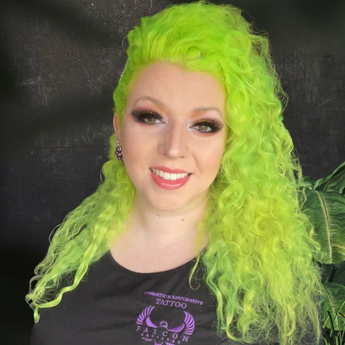
 By Candice Falcon
Note: Photo of a nipple tattoo being performed is shown at the end of this post.
Research fatigue is real. After navigating diagnosis, treatment, surgeries, and recovery, the idea of researching specialized restorative tattoo artists can feel overwhelming. Those emotions are especially heightened because for many, this is also their first tattoo.
Knowing a little about the process helps empower you in your decision, as this step matters. Often, nipple tattoos are considered a last step in lessening the impact of the physical reminders of breast cancer. It’s an appointment that can bring excitement, nervousness, relief, and a deep sense of closure. The experience of your tattoo is just as important as the artistic outcome.
Understand your choices, timing, and how to find an artist who is properly trained to work with post-surgical, compromised skin—because not all education, and not all artists, are created equal. Ask questions. Feel free to reach out to an artist to confirm good timing and start the conversation when you are ready for the tattoo, both physically and mentally.
Who Can Get Nipple Tattoos?
Some feel like their situation isn’t represented in nipple tattoos, so to clarify, you don’t have to have a “typical” breast reconstruction to be a good candidate for tattoos! Here are some examples and what you can do with restorative tattooing:
- No reconstruction (flat closure or explant surgery): There doesn’t need to be a typical breast mound for there to be a nipple.
- Nipple protrusion surgery: Whether or not you choose to have the nipple reconstructed, you can have the area tattooed to provide the missing colour.
- Unilateral mastectomy: the tattoo can be matched to your remaining side.
- Scarring where the nipple tattoo would be: This needs to be done with considerations, but scars don’t need to be avoided in nipple placement.
- In certain late-stage or palliative situations, nipple tattooing may still be possible. I have tattooed individuals living with advanced cancer, as it was something important to do for themselves. In these cases, to ensure optimal health and safety, clearance from the doctor or surgical team is required.
Training and Experience Matter
Unfortunately, tattooing is not well regulated, and people can take quick online training with no prior tattooing or art experience. Well-intentioned or not, this can cause further damage and scarring and can make people feel worse instead of better. This tattoo specialization is not the same as permanent cosmetics or decorative body tattooing. There is background knowledge about surgeries and treatments, compromised skin, timing and expectations on how the tattoo heals differently.
A qualified restorative tattoo artist should have:
- Advanced training specifically in nipple tattoos and post-mastectomy.
- A deep understanding of colour theory, especially as it relates to different skin tones.
- A respect for the experience as well as the artistic outcome - someone who listens, explains, and respects your experience.
- When choosing an artist, take time to look closely at their healed work—not just fresh photos.
What is the Right Timing for Scar and Nipple Tattoos?
Generally, nipple and areola tattooing should only be done after all surgeries are complete, the skin has time to heal and the scars have matured. This is generally around the 1-year mark post-surgery. I also check photos in advance to confirm that everything appears settled and ready to be tattooed.
What the Appointment Is Like
To fully relax and know what to expect, your artist should outline your pre-appointment info as well as any notes that may help during (like what to wear) as well as aftercare and healing expectations.
If you’d like, you can take reference pictures before your surgeries, however your artist should have references to show you as far as size, shape and colour. The shape and placement will be drawn on for your approval before it is tattooed.
Most nipple tattoos are completed in two sessions:
- The first session lays the foundation of colour and shape - ideally start a little lighter and smaller than you think, as you can always add more colour.
- The second session is done after you’ve healed (10-12 weeks later) and fills in anything that didn’t heal evenly, as well as adding details, so the skin isn’t overworked trying to fit everything into one session.
Connection and Collaboration
The best outcomes happen when surgeons and tattoo artists work together. More surgeons are now learning about restorative tattooing and recommending artists as part of the reconstruction process, recognizing that tattoos can fully showcase surgical results.
It can be hard for tattoo artists to access survivor-only support spaces, which is why I encourage patients and support groups to view qualified artists as educational resources. Asking questions, hosting conversations, and connecting artists with communities helps everyone make more informed decisions.
Candice performing a restorative nipple tattoo.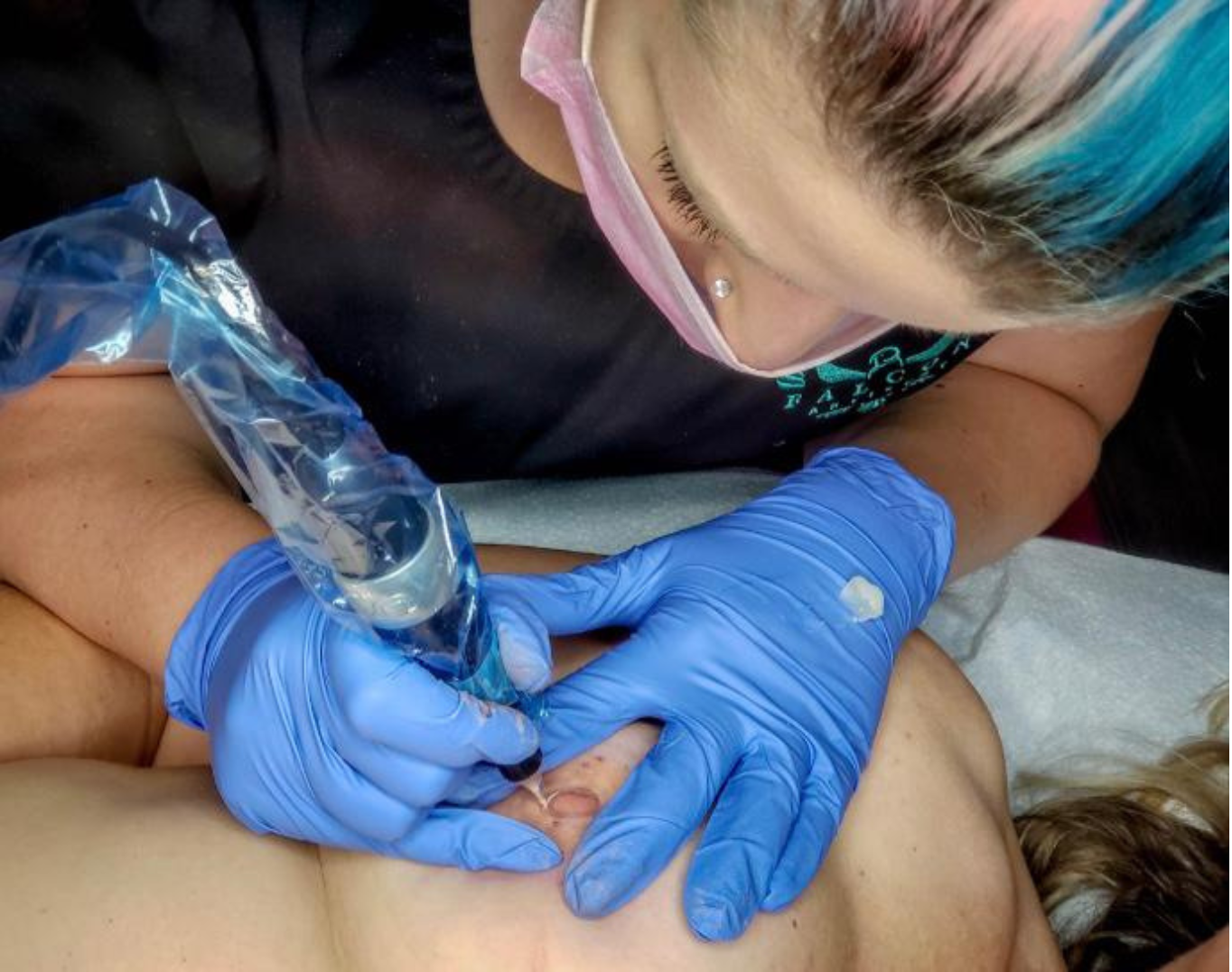
Candice Falcon (@falconartistry) is a medical and restorative tattoo artist and educator from Vancouver, BC with a second location in Las Vegas. To provide accessibility, she will travel if there is enough need within a community. Candice regularly speaks at industry conventions, collaborates with surgeons, and performs live demonstrations at events such as Breast Reconstruction Awareness Day (BRA Day) to help bring awareness to both patients and healthcare professionals about what is possible through tattoo. You can view her work online at www.falconartistry.com.

 Receive updates by email

