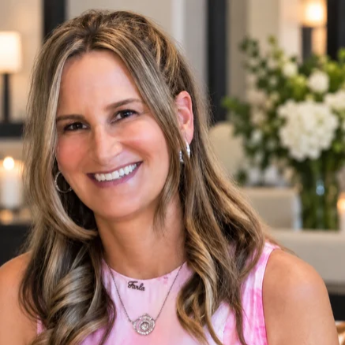
 Farla Efros spent more than 30 years helping businesses navigate change. As a retail strategist and executive, she was accustomed to making difficult decisions, finding solutions and leading with confidence. She was used to having answers. She was used to being in control.
And then came breast cancer.
In 2023, at age 51, an MRI revealed a tumour in her right breast, despite a clear mammogram. The diagnosis was stage IIB, triple-positive invasive ductal carcinoma. Farla was stunned. Cancer was already painfully familiar to her family: she had lost her sister to cancer and her mother to metastatic breast cancer. Now she was confronting the disease herself, with a husband and daughter she loved and a future she could no longer take for granted.
“I spent more than 30 years building businesses, leading teams and believing that hard work, determination and a little stubbornness could solve almost anything,” Farla recalled. “Cancer was the one thing I couldn’t outwork, outthink or negotiate my way through.”
The Physical and Emotional Weight of Breast Cancer
Treatment included chemotherapy and HER2-targeted therapy with Herceptin. In April 2024, Farla underwent a bilateral mastectomy, followed later by breast reconstruction. She also had surgery to remove her ovaries and fallopian tubes. Although she did not need radiation and today has no evidence of disease, the end of active treatment did not mean the end of its effects.
Farla describes the ongoing fatigue, joint pain and stiffness, brain fog and memory difficulties that have altered her everyday life. Surgical menopause and continuing endocrine therapy with letrozole have brought further challenges. Her energy, physical strength and stamina are not what they were before cancer. For someone who built a career on thinking quickly and juggling competing demands, the cognitive changes have been especially difficult.
“Treatment reshaped how I moved, slept, worked and lived. I had to relearn what ‘normal’ meant and accept that my body had changed in ways that were permanent. It was a loss, and it required grieving.”
There were emotional losses alongside the physical ones. Farla questioned her identity, purpose and faith. She experienced fear, anger, grief and exhaustion, often at the same time. Grieving her mother and sister while facing her own cancer made an already frightening experience even more complicated.
Her family history also makes her think about the next generation. As the mother of a daughter, Arielle, Farla knows the worry does not end with her own treatment. She wants her daughter to have a future shaped by better research, earlier detection and more effective options—not by fear of repeating the family's experience. It is one of the reasons cancer research and patient advocacy matter so deeply to her.
“It made me more vulnerable, but also more grounded,” Farla explained. “I stopped pretending. I started telling the truth—in my life, in my advocacy, and in my writing.”
Her relationships changed, too. Her husband, Mik, and their daughter saw a vulnerability she had rarely shown. Some friendships grew stronger; others faded as people struggled to respond to her illness. Farla became more deliberate about where she placed her energy and whom she kept close.
“Cancer reshaped every relationship. It strengthened some, strained others, and exposed truths I had ignored. It changed how I connect, how I set boundaries, and how I value the people in my life. I no longer tolerate performative relationships. I choose depth.”
A New Purpose and a Different Kind of Leadership
Cancer interrupted Farla’s executive career, but it also prompted her to reconsider what she wanted to do with her experience. She began speaking openly about survivorship—not as a neat return to the person she was before, but as a complicated process of adapting to a changed body and life.
“I don’t want to be defined simply as a breast cancer survivor. I want to thrive. That means using my voice to advocate for others, challenging the silence around the long-term effects of cancer, and reminding women that their lives and identities are so much bigger than a diagnosis.”
Today, Farla uses the leadership skills she honed in boardrooms to advocate for patients. She speaks about the financial, physical and emotional burdens of cancer, the importance of asking questions and being heard, and the need for care that extends beyond treatment to the realities of living afterward.
In her book, F*ck Cancer: Commanding a Comeback When Your Body Turns On You, Farla shares the raw, sometimes darkly funny and deeply personal realities of her experience. She hopes readers find permission to acknowledge grief and anger without giving up their agency or their hopes for the future.
“I carry my mother and sister with me, and I hope that by sharing my story, I can help another woman feel less alone, ask more questions and advocate for herself. Cancer changed my life, but it did not take my power. I reclaimed it—and I use it every single day.”

 Receive updates by email


