By continuing to use our site, you consent to the processing of cookies, user data (location information, type and version of the OS, the type and version of the browser, the type of device and the resolution of its screen, the source of where the user came from, from which site or for what advertisement, language OS and Browser, which pages are opened and to which buttons the user presses, ip-address) for the purpose of site functioning, retargeting and statistical surveys and reviews. If you do not want your data to be processed, please leave the site.
The Voice of People With Breast Cancer

Information
Living with Breast Cancer
Daily Life and Practical Matters
Younger Adults
Getting a breast cancer diagnosis is hard at any age but hearing this news as a younger adult can feel especially overwhelming. While breast cancer is more common later in life, about 17% of cases in Canada occur in people under 50. For those aged 20 to 49, it’s the most commonly diagnosed cancer.
Being diagnosed at a younger age often comes with challenges that differ from those of older adults, such as:
- Worrying about how treatment might affect fertility and family planning
- Navigating relationships, dating and body image
- Finding emotional support that fits your life stage, especially if friends or peers have distanced themselves
- Facing career or school interruptions
- Balancing responsibilities for young children or aging parents
- Navigating concerns about finances and insurance
- Coping with medical menopause, fatigue, or brain fog
You may also face decisions earlier than expected. For example, having to think about family planning before you feel ready, or arrange help at home if you are going through treatment without a partner. These choices can feel rushed or emotionally heavy, especially when you are trying to build a career, support your family and plan for your future.
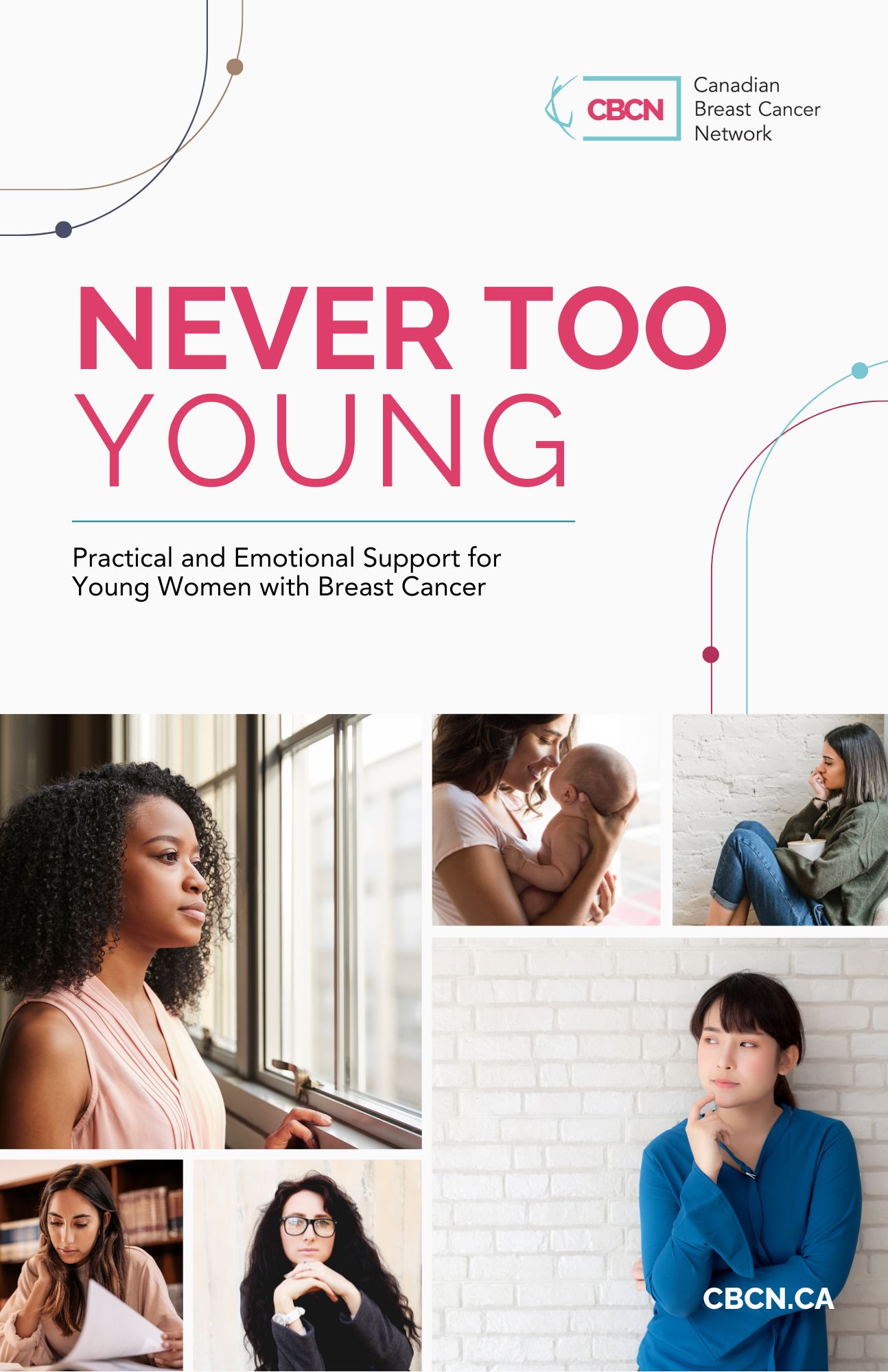 Our guide, Never Too Young: Practical and Emotional Support for Young Women with Breast Cancer was created to support younger adults through these experiences. It includes practical advice on talking to your family, navigating work or school, understanding fertility and pregnancy considerations, and finding emotional support.
Resources and Support
- Rethink Breast Cancer
- Young Survival Coalition
- Breast Cancer and Younger Women: New Treatment Options (Webcast): Learn about current treatment approaches for younger adults.
- References
-
Breast Cancer Now. (2025). Breast cancer in younger women: Diagnosis and treatment. https://breastcancernow.org/about-breast-cancer/primary-breast-cancer/breast-cancer-in-younger-women/breast-cancer-in-younger-women-diagnosis-and-treatment
Canadian Breast Cancer Network. (2024). Never too young: Practical and emotional support for young women with breast cancer. https://cbcn.ca/web/default/files/public/Reports/NTY%20Final%20Digital%20EN%202024.pdf
Canadian Cancer Statistics Advisory Committee. (2025). Canadian cancer statistics 2025. Canadian Cancer Society. https://cdn.cancer.ca/-/media/files/research/cancer-statistics/2025-statistics/2025_pdf_final_en.pdf
CancerCare. (2025). Breast cancer in younger women: New treatment options [Audio webcast]. https://cancercare.org/connect_workshops/1167-breast_cancer_younger_women_treatment_options_2025-03-26
Fernandes, U., Guidi, G., Martins, D., Vieira, B., Leal, C., Marques, C., Freitas, F., Dupont, M., Ribeiro, J., Gomes, C., Marques, R., Avelar, P., Esteves, A. S., & Pinto-de-Sousa, J. (2023). Breast cancer in young women: A rising threat: A 5-year follow-up comparative study. Porto Biomedical Journal, 8(3), e213. https://doi.org/10.1097/j.pbj.0000000000000213
The Canadian Cancer Society has a database that can be used to find local support services in your area. You can access it below:
SHARE

Our Stories

Events
 Receive updates by email Subscribe Now
About CBCN
CBCN strives to voice the views and concerns of breast cancer patients through education, advocacy activities, and the promotion of information sharing.
Canadian Breast Cancer Network
Mailing Address: M013 - 1367 Clyde Ave. Ottawa, ON K2G 3H7
Tel: 613-230-3044
Toll-free: 1-800-685-8820
Email Us


